

Fenacore supports a project that will save on irrigation 30% of energy and water
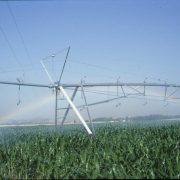
The National Federation of Irrigation Communities (FENACORE) has participated in a European project whose objective is to promote on a large scale an intelligent irrigation system capable of saving up to 30% energy and up to 30% water, without affecting the quality standards that foreign markets demand for crops.
This project, under the name Life Irriman, is developed with funds from the European Union in close collaboration with the Regional Ministry of Agriculture of the Region of Murcia, the Higher Council for Scientific Research (CSIC), the Polytechnic University of Cartagena (UPTC) or the University of Cordoba (UCO), among other institutions, responds to the current need for irrigation modernization projects to satisfy a dual efficiency: water and energy.
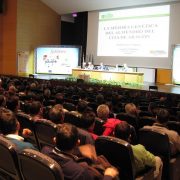
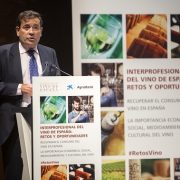
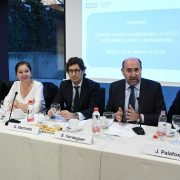
As the president of FENACORE, Andrés del Campo recalled, during the conference held on February 16th at the Polytechnic of Madrid to present the results of the project, since the special tariffs were abolished in 2008, the power term has increased by more Of 1.000%, causing that the average increase of the electric bill for the irrigation has been superior to 100%, making unviable much of the systems of irrigation already modernized, that save water, but demand more energy.
In this context, administrations, technicians and universities must join forces to focus on irrigation systems that save water and energy as a basis for sustainable agriculture.

The Irriman system, which has already been applied in irrigated areas of Murcia and Cordoba, is a qualitative leap because, by means of an algorithm, it indicates in a simple way to the farmer how, when and how much to irrigate, adjusting to the maximum the consumption of resources
In addition, it serves as a reference to irrigators throughout the Mediterranean, who share with the Spanish the need, on the one hand, to produce more with less water in an environment where there are fewer and fewer resources per capita and, on the other hand, to reduce the costs derived from the high energy consumption of modernized systems.
Most affordable energy supply
With the figures from the Irriman project on the table, irrigators are asking the Executive to articulate the framework legislation that will allow not only to advance in the modernization of irrigation according to this double saving of water and energy, but also to boost the production of distributed energy for consumption in order to effect a reduction of tariffs.
While it is true that recently has been developed more advantageous electricity taxation and a reduction of modules, which is assuming an average annual saving of 54 million euros per year, additional solutions are needed to compensate for the 300 million euros per year of extra cost that the Sector has been supporting in the last eight years, based mainly on the fixed costs regulated by the Government to compensate the tariff deficit.
This European intelligent irrigation initiative is in addition to other Fenacore-driven measures such as the Maslowaten project to boost the use of photovoltaic energy in water distribution systems or the use of uneven terrain to generate energy
However, according to Del Campo, “these measures are partial solutions, since it would be essential to complete them with measures such as payment of the power actually used and not the maximum contracted during the twelve months of the year, even if the irrigation stations are not in operation. It would also be crucial to adapt the standard so that in a single contract we can modify the contracted power twice a year or apply a reduced VAT to irrigation communities, just as it already applies to irrigation in Italy”.
Source: FENACORE