

Spain, international leader in water savings
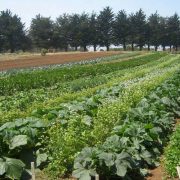
Spain is international leader in saving water as a result of having got the transformation of traditional irrigation systems in surface drip systems in more than 49% of the irrigated zones, such as has reported the National Federation of Communities Irrigators (FENACORE) on the occasion of the celebration of World Environment Day on June 5. This process of modernization of irrigation has been being driven by irrigators in collaboration with public administrations, and currently results in a reduction of almost 14% in average annual savings of irrigation water, turning a total consumption nearly 17,000 cubic hectometres into about 14,500 cubic hectometres presently, according to the National Statistics Institute (INE) data, collected by this Federation.
Another achievement of this commitment to modernization in irrigation systems is the fact that in many irrigated areas is recorded a saving in the use of water above 25%, says FENACORE which considers that this public-private collaboration in irrigation has made possible a 180 degree turn in managing a scarce resource such as water and, in terms of volume, represents a reduction of more than 2,360 cubic hectometres, with which about 100.000 Olympic swimming pools could be filled.
For the Federation, “these numbers disassemble the image that certain sectors of society try to convey to the public about the management and use of water irrigation made in Spain, accusing the irrigators such as profligate and asking for alternatives to intensive irrigation. “In that sense, FENACORE warns that “if in 2050 agriculture will have to increase production by 60% and 100% in developing countries, as indicated by international organisms as the Food and Agriculture Organization (FAO), this is only possible with irrigation which if only represents 15% of the utilized agricultural area, contributes 60% of the final production, producing up to six times more than the rainfed crops.”
FENACORE emphasises also on how irrigated agriculture has a number of positive externalities on the environment, through the supply of oxygen to the atmosphere, reducing erosion and desertification or performance crops as atmospheric CO2 sinks genuine, considering that in Europe this biomass absorbs about 12% of CO2 that industries emit. In the words of its president, Andres del Campo, “farmers are the first interested in conservation and environmental care. You can say that we are the biggest environmentalists the world, for the simple reason that we live in the natural environment and from the natural environment. So its conservation depends the modus vivendi of our descendants, who are the future generations”.

FENACORE is a non-profit and independent politically organization, created in 1955, which brings together the entities dedicated to the management of irrigation water, both surface and groundwater, with the aim of joining forces and wills in defending their legitimate interests and water use rights. Currently, it has more than 700,000 irrigators and more than two million hectares, more than 80% of the national irrigation grouped in irrigation communities.
The Federation works closely the Ministry of Agriculture, Food and Environment. Furthermore, it is an advisory body of the Ministry and nato member of the National Water Council. In the international context, FENACORE is a founding member of the Euro-Mediterranean Irrigators Community (EIC).
Source: FENACORE