
Why Spain’s Olive Sector sees the EU–Mercosur agreement as a threat
We analyse the EU–Mercosur agreement and its consequences for the Spanish olive sector together with Cooperativas Agro-alimentarias de Andalucía: a deal presented as an opportunity, yet perceived as a threat. By Marga López Polo, agri-food journalist The trade agreement between the European Union and Mercosur, negotiated for more than two decades, is currently on hold, though far from absent in sector debates and mobilisations. The European Commission has described the situation as a “technical pause”, and both Brussels and the Spanish Government have reiterated that the pact remains strategic and will be reactivated once the review phase is completed. During Spain’s presidency of the EU Council, the Ministry of Agriculture argued that the agreement would open opportunities for export-oriented sectors such as olive oil, insisting that Spain would be “one of the major beneficiaries”. However, this institutional narrative sharply contrasts with the perception of the Andalusian olive sector, which believes that the agreement, as currently drafted, not only fails to benefit Spanish olive growers but also jeopardises their future competitiveness. This was made clear during a recent briefing organised by Cooperativas Agro-alimentarias de Andalucía, attended by eComercio Agrario. A deal negotiated without the sector and under asymmetric conditions For Cooperativas Agro-alimentarias de Andalucía, the criticism is unanimous: the sector has not been heard. Rafael Sánchez de Puerta, president of the national olive oil division of Cooperativas, summarises it clearly: “The sector has not been taken into account in the negotiation.” This exclusion is even more serious, he explains, because the agreement is built on a profoundly unequal basis: while Europe imposes increasingly strict social, labour and environmental requirements, Mercosur countries operate under far more lenient regulatory frameworks. The result is a direct loss of competitiveness. Sánchez de Puerta puts it bluntly: “Social and environmental conditions make us lose competitiveness compared to Mercosur countries.” Despite this, some administrations have presented the agreement as an opportunity for olive oil. The sector sees this as a diagnosis disconnected from productive reality. “They say the olive oil sector is a major beneficiary, but we don’t see it that way. We find this agreement disrespectful, because it does not establish equal conditions.” An open European market versus countries with no land or water constraints One of the sector’s most repeated arguments is the productive asymmetry. While Spain faces water shortages, environmental restrictions and difficulties in expanding irrigation, countries like Brazil and Argentina have land, water and room for growth. Sánchez de Puerta warns that if Europe opens its market without correcting these differences, other countries will increase their production while Spain is forced to limit its own. He summarises it as follows: “We are concerned about production limits here while other countries will find an open market. Those countries have no land or water constraints.” The risk is not theoretical. Cristóbal Gallego, president of the olive oil division of Cooperativas de Andalucía, recalls that the agreement includes a 10% tariff for European imports over 15 years, which will gradually decrease, while Argentina will be able to export oil to Europe tariff-free from day one. And although Argentina does not currently have significant production, the incentive is clear: “They can activate production as soon as they find a free, tariff-free market. And an olive plantation produces oil in just 3–4 years.” The combination of preferential access, abundant resources and lower production costs opens the door to rapid expansion of olive groves in Mercosur countries. “They have no land or water limitations,” Cristóbal insists. The suspension of the agreement: a temporary relief, not a solution The recent suspension of the agreement has been welcomed as good news, but the sector remains cautious. Jaime Martínez-Conradi, director general of Cooperativas Agro-alimentarias de Andalucía, puts it plainly: “It is good news that the agreement is now on hold, but we know it will be reactivated in two years.” For the sector, this period is merely a grace interval before the pact is approved in its current form. And the impact, they warn, would be severe: “It will be very damaging for our sector.” The sector does not reject trade: it demands policies to compete A key point the sector wants to emphasise is that it is not opposed to international trade. On the contrary, Spanish olive production is highly export-oriented. As Sánchez de Puerta reminds us: “As cooperatives, we defend an open market because we defend exports.” The problem is not trade itself, but the lack of policies that allow competition on equal terms. And here, the diagnosis is unanimous: Increase irrigated land to convert dryland into irrigated olive groves. Water policies focused on competitiveness, not only restriction. Modernisation and reduction of administrative burdens. Stronger defence in Brussels against agreements that generate unfair competition. Martínez-Conradi summarises the sector’s concern in one sentence: “Only then can we have a competitive olive sector.” A deal that requires deep revision The EU–Mercosur agreement is presented by administrations as a strategic opportunity, but the Spanish olive sector sees it as a structural threat. The combination of regulatory asymmetries, productive advantages in Mercosur countries, internal limitations on water and land, and preferential access to the European market for emerging competitors creates a scenario that could undermine Spain’s global leadership in olive oil. The current suspension offers a window to correct imbalances, but time is limited. As the sector warns, if Spain does not adopt competitiveness policies now, it could lose ground in just a few

Olive oil mill outputs rise in January to 158,855 tonnes
The olive oil sector maintains a steady pace of sales at the start of 2026, with a notable increase in mill outputs and a cumulative production already exceeding one million tonnes. Table olives, meanwhile, closed January with lower stocks and a processed volume approaching 502,000 tonnes. The market update for the olive oil and table olive sector as of 31 January, based on reports to the AICA, confirms a dynamic month in terms of dispatches, supported by high production levels and a market continuing to absorb significant volumes. Olive oil in mills: high production and rising outputsIn the fourth month of the 2025/26 campaign, olive oil production reached 321,039.82 tonnes in January, bringing the cumulative campaign total to 1,044,116 tonnes. This volume consolidates a notably productive campaign and explains the significant increase in stocks recorded at the end of the month. Total market dispatches amounted to approximately 123,380 tonnes, maintaining the strong sales pace observed in the first months of the campaign. The cumulative total between October and January stands at 476,060 tonnes. This calculation includes an estimated 25,000 tonnes of imports, pending confirmation by Customs. With this reference, January exports would reach around 78,320 tonnes, while the domestic market absorbed roughly 45,060 tonnes. Strong rebound in mill outputsOne of the most remarkable figures of the month is the performance of mill outputs, which reached 158,855 tonnes – an increase of 27,220 tonnes compared with December and 58,080 tonnes compared with November. The cumulative total as of 31 January now stands at 479,061.49 tonnes, reflecting intense activity at origin. Stocks rise due to high productionEnd-of-January stock distribution shows a general increase across all operators: End of 2024/25 campaign: 289,943 t Mills: 726,965.67 t (+173,051.64 t vs December) Bottlers: 209,230 t (+46,896 t) Olive Growers’ Community Assets: 7,492 t (+3,262 t) Overall, stocks total 943,688 tonnes, an increase of 224,306 tonnes compared with December, driven by high production during the month. Table olives: stocks decline, campaign stableFor table olives, the fifth month of the 2025/26 campaign shows a more moderate performance, with declining stocks and a processed volume progressing as expected. The campaign’s initial stocks were 317,935 tonnes. In January, 3,012.96 tonnes were processed, bringing the cumulative total to 501,864.88 tonnes, of which 397,590.78 t are from Andalusia and 94,271.10 t from Extremadura. Cumulative imports total 15,547.11 tonnes, while exports have already reached 119,195.76 tonnes, including 17,682.22 tonnes in January alone. The domestic market has absorbed 61,089.53 tonnes so far this campaign. End-of-January stocks stand at 633,530.02 tonnes, a monthly decrease of 29,170.01 tonnes, reflecting an active market both in exports and domestic consumption. The January data show a very dynamic olive oil sector, with solid dispatches and a notable increase in stocks due to high production levels. The market maintains a strong pace, particularly in exports. For table olives, the campaign progresses steadily, with a significant processed volume and stocks beginning to adjust after a month of intense

EU Olive oil production to recover by 36% in 2024/25 campaign, driven by Spain
Olive oil production in the European Union is expected to rebound by 36% in the 2024/25 campaign, following two years of sharp declines caused by adverse weather conditions. This is according to the Olive Oil Dashboard published by the European Commission’s Directorate-General for Agriculture on 18 July 2025. The report forecasts total EU production to reach 2.1 million tonnes, with Spain leading the recovery thanks to a 66% year-on-year increase, reaching 1.415 million tonnes. Production is also expected to grow in Greece (+30%), Portugal (+10%), and other Member States, while Italy is forecast to experience a 24% decline, down to approximately 220,000 tonnes. Sharp Drop in Farm-Gate Prices Despite the production recovery, farm-gate prices continue to fall sharply. In June 2025, the average price for extra virgin olive oil in Spain stood at €359.9/100 kg, 55% lower than the same month in 2024. Italy maintains the highest prices at €960/100 kg, with a modest 2% year-on-year increase. Lampante and virgin olive oils have also seen significant price declines. In Spain, lampante prices dropped 57%, while virgin olive oil fell by 60% compared to June 2024. Export Growth and Rising Pressure from Third Countries EU olive oil exports to non-EU countries are projected to reach 760,000 tonnes, a 25% increase over the previous campaign. At the same time, extra-EU imports are also expected to grow, hitting 220,000 tonnes. The European Commission highlights the rapid production growth in non-EU countries, particularly Turkey (+109%) and Tunisia (+55%), which could intensify competition in global markets. Consumption Rebound and Slight Increase in Stocks EU internal consumption is also recovering, estimated at 1.418 million tonnes, while ending stocks are expected to rise slightly to 444,000 tonnes—still below the average of the last five seasons. This dashboard is part of the European Commission’s regular monitoring of the olive oil sector and is available on its official website. Source: Olive Oil Dashboard – DG AGRI Dashboard. European Commission, 18 July 2025.Link to original

Rising olive oil prices raise alarm in the sector over fraud risks
The EU is the world’s largest producer of olive oil, accounting for around 65% of global production. However, due to unfavourable climatic conditions, recent harvests have been poor. In 2022/23, EU olive oil production fell by around 40% compared to previous years, and in 2023/24, production dropped by 25% compared to the five-year average. This trend is reflected globally with olive oil production in decline across many regions. As a result, prices for olive oil have surged worldwide, with increases ranging from 100% to as much as 175% for extra virgin olive oil, depending on the market. In this context, consumers may be drawn to cheaper alternatives while traders might be tempted to offer lower-cost options, thus increasing the risk of fraud in a market known for its quality and centuries-old traditions. Unfortunately, fraud in the olive oil sector is not a new threat. Olive oil is a high-value product and the temptation for unscrupulous actors to maximise profits at the expense of consumers and product quality persists. When consumers are unfamiliar with the differences between various types of olive oil, fraudulent practices become more prevalent. That is why it is crucial to toughen the administrative responses and criminal sanctions for fraudsters while investing in consumer education. Once consumers are aware of the distinctions between extra virgin, virgin, lampante, pomace, and refined olive oils, as well as the processes and flavours involved, the rate of fraud will fall. Educated consumers will be able to make informed decisions and avoid lower-quality products. A practice that is customary in the olive oil sector is blending of different vegetable oils. On this matter, I must raise an important issue with the current EU marketing standards that Copa-Cogeca has long called to reform: the ability to prohibit the sale of olive oil blends in countries where their production is not allowed. Currently, EU rules permit legitimate blending of olive oils with other vegetable oils, and Member States can choose to ban such blends within their territories. This policy is designed to protect and promote the quality of pure olive oil and reduce the risk of misleading consumers. However, there is a loophole: if olive oil from a member state that prohibits blending is exported to another EU country where blending is allowed, the blended oil can be re-imported and sold in the original state. Although this is technically legal, it undermines the intent of the original ban as it allows the blend to “leave through the front door and return through the back.” Consumers deserve to know that when they buy olive oil, they are getting pure olive oil, not a blend with lower-quality products. In addition to addressing the issue of blends, we need to focus on how olive oil is presented to consumers. Some Member States have implemented stricter regulations requiring non-refillable bottles for olive oil in restaurants and catering establishments. These bottles ensure that what is being served is genuine olive oil and not a lower-quality substitute. Harmonising such rules across the EU would not only promote internal market cohesion and facilitate trade, but also ensure consistent product safety, quality, and consumer protection. I urge the olive oil sector, consumer organisations, and EU institutions to work together to enhance traceability and consumer protection, with a focus on blends and packaging. We need stronger safeguards to ensure olive oil remains a premium product that consumers can trust. Furthermore, we cannot ignore the competition from neighbouring countries in the Mediterranean basin, such as North Africa and the Middle East. Even though these regions face similar climatic challenges, their production costs are much lower than those in Europe. Countries like Tunisia, for example, have been exporting more than 56,000 tonnes of olive oil to the EU annually, duty-free, since 1998. While these imports can help lower prices during times of scarcity, they should be viewed as a temporary solution. Turning European consumers towards non-EU olive oil poses a threat to the EU’s high-quality production standards. In recent years, due to reduced EU production, imports from third countries like Chile and Argentina have increased. While European producers are committed to upholding labour rights, environmental standards, and economic sustainability, these same guarantees do not always apply to imports from non-EU countries. It is essential that we reflect these values in international trade agreements and prioritise European production. Olive oil is one of the pillars of the Mediterranean Diet which is considered a complete and balanced dietary model with proven health benefits and considered world intangible heritage by the UNESCO. Olive oil is a product of high nutritional quality as it is composed of monounsaturated fatty acids, vitamin E and β-carotenes, which gives it cardio-protective properties. I remain confident that the new EU legislative mandate will prioritise the protection of olive oil and it is imperative that we take swift action to preserve the integrity and quality of this iconic product, ensuring its future in an increasingly competitive global

The EC authorizes private storage for olive oil
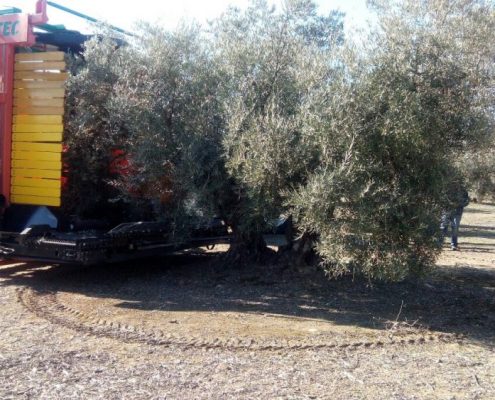
The commissioner has announced the imminent presentation of a proposed regulation for the opening of a measure to help private storage of olive oil, to help adjust the offer.