
Retail

Inicio > International > Others > USA: Asemesa warns that the investigation against the Spanish olive question the EU aid system

USA: Asemesa warns that the investigation against the Spanish olive question the EU aid system

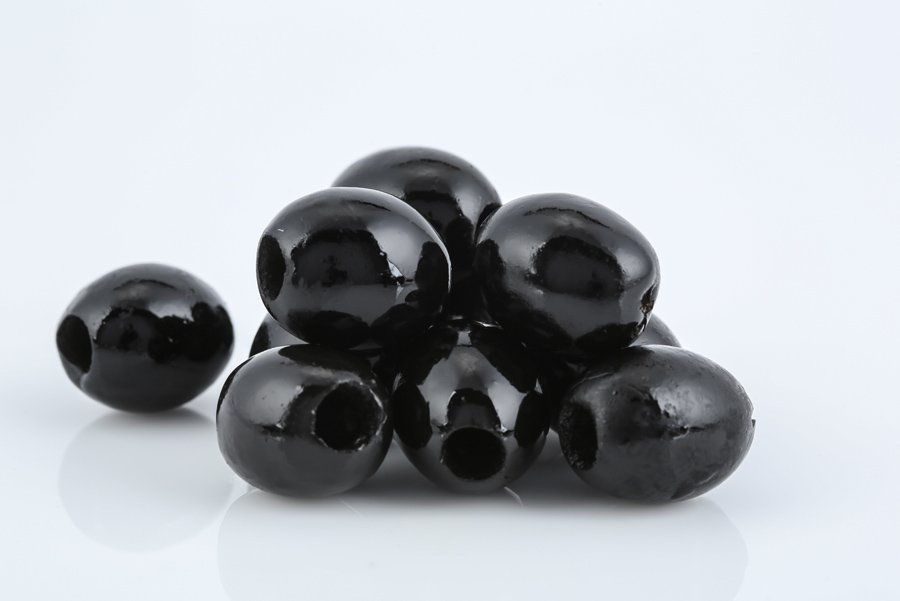
The Association of Exporters and Industrialists of Table Olives (ASEMESA) warns that the investigation of the Department of Commerce of the United States against the black olive of Spanish table question the system of aid of the European Union, and could have far-reaching consequences for all the agricultural sector of the EU.

By Redacción ECA

Share

[dkpdf-button]
The Association of Exporters and Industrialists of Table Olives (ASEMESA) warns that the investigation of the Department of Commerce of the United States against the black olive of Spanish table question the system of aid of the European Union, and could have far-reaching consequences for all the agricultural sector of the EU.

In the framework of the anti-subsidy investigation against Spanish table olives, the US Department of Commerce has adopted the provisional decision to consider that the subsidies received by producers under the Common Agricultural Policy (CAP) constitute subsidies subject to compensatory measures that harm its American competitors. Thus, it has imposed a provisional antidumping duty of 4.47%.

For ASEMESA, this process calls into question “unfairly and arbitrarily” the totality of European agricultural support programs, seriously affecting all the beneficiaries of CAP subsidies, from wheat farmers in France to producers of Polish milk, explains Antonio de Mora, Secretary General of ASEMESA.

The sector fears that the investigation is not developing fairly, but rather is conditioned by the wave of protectionism in the US
As ASEMESA clarifies in a communiqué, CAP aid received by Spanish producers strictly comply with the regulations of the European Union (EU) and the World Trade Organization (WTO) and are not specifically directed to the industry of the olive, but to the entire European agricultural sector.
CAP aid to Spanish olive producers is also granted to any farmer or rural development project within the EU. And as such, they can not be subject to countervailing measures

Antonio de Mora, Secretary General of ASEMESA has indicated that “beyond our disagreement, our concern also goes through the lack of proportionality that the Department of Commerce’s investigation is suffering from. The burden imposed by the Department of Commerce on the companies selected in the investigation and their olive suppliers in recent months is exceeding the limit of what is reasonableThese measures make us less competitive compared to other producing countries such as Egypt, Morocco and Turkey, which will not be affected by these measures and will be able to gain positions in the market”.

The companies selected for the research have been dedicated, during the last four months, to collect enormous amounts of information and to provide answers to extensive questionnaires, often arbitrary, in unreasonably short periods.
The preliminary measure of imposing a tariff on Spanish exports of table olives will come into force when it is published in the official US newsletter, in about a week.

The anti-dumping and anti-subsidy proceedings against the Spanish olive began on July 11, 2017. The final decisions will be adopted at the beginning of June 2018. The olive sector in the United States has yet to demonstrate that the imports of black olivesof Spanish table cause him a prejudice. This issue will be examined by a different agency, the United States International Trade Commission.

Source: Asemesa
Latest news

Related news

Trelleborg tires Recognized as Best Agriculture Tire at the 15th Visão Agro Centro-Sul Awards

Trelleborg Tires is a leading global brand delivering advanced solutions for professionals in Agriculture, Material Handling and Construction. Trelleborg anticipates customer needs with a wide range of high-performing tires and complete wheels for off-highway vehicles, ...

Spain’s industrial production of animal feed exceeds 30.8 million tonnes

However, Spain’s National Statistics Institute (INE) has updated its calculation method, and a larger number of products are now included in the industrial animal feed category....
exportaciones agroalimentarias

Spain’s mills could start November with only 50,000 tonnes of olive oil

Sector declarations to Spain’s AICA confirm a very tight end of the campaign: if the current pace of withdrawals continues, mills will reach the start of the new season with minimal stocks. Cooperativas Agro‑alimentarias de España warns that inventories could fall to 50,000 tonnes by 30 October....

In Spain, online food shopping is consolidating as a weekly habit

7.2% of consumers in Spain now carry out all their food shopping through the online channel....