
The dairy production sector, strengthened after the signing of Agreement of value chain by UPA
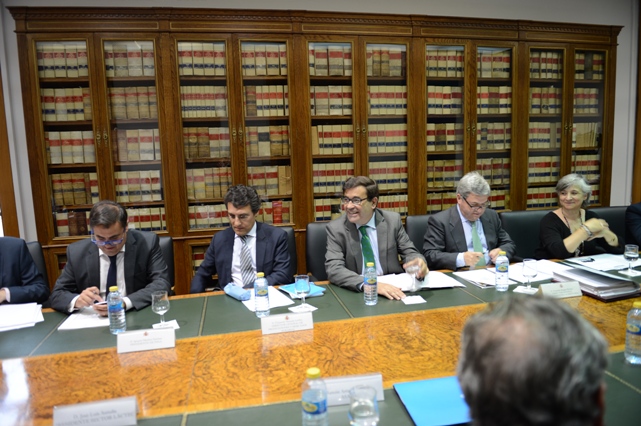
The dairy production sector will be strengthened its negotiating position after the accession of the Union of Small Farmers and Ranchers (UPA) to the Agreement for Stability and Sustainability of the value chain in the beef sector of milk, according praised the Secretary General of Agriculture and Food, Carlos Cabanas, who presided on June 9th at the headquarters of the Ministry, the eighth monthly follow-up meeting in the dairy Agreement.
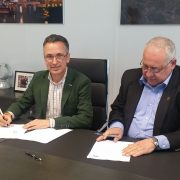
UPA is the second Professional Agricultural Organization, together with the Agrarian Association of Young Farmers (ASAJA) (whose commitment to the dairy sector materialized from the time of signing the Agreement), which has acceded to the Agreement. With the signing of this Organization, beef farmers milk are endorsed its position on the table of the Agreement, which is consolidating as dialogue table for all members.
Although Cabanas rated the highest degree of compliance by industry of the commitment to indicate the origin of the milk labeling, recognizes that this initiative should be strengthened. In that vein, the Secretary General has encouraged companies to move forward in identifying the source, in a clear way, and to use the logo Sustainable Dairy Product (PLS), as there is still room for improvement. It has also called for the strengthening presence in retail outlets, of products made with milk from Spanish origin.
Cabanas noted the desirability of that industry occupies most of its domestic market with national product and that distribution advances in purchase longer-term modalities.

The meeting has also been advanced that next June 27 the second phase of the campaign to promote the consumption will start, developed and funded jointly INLAC and the Ministry of Agriculture, which will focus on Internet, radio and television.
Price upwards
The Secretary General highlighted the fact that the average price of milk received by the Spanish farmer has been located in the last four months above the European average price, a situation that did not occur for many years. However, Cabanas pointed out that there are certain livestock and productive areas where the situation is still difficult. In this regard, progress has been made, according to the latest report from FEGA, the price received by farmers in the last month registered, as in other EU countries, a reduction. The price currently stands at € 0.298 / l.
As reported Cabanas, continues the progressive use of approved contracts in relations between farmers and first buyers. Currently, INLAC has already received more than 1,050 contracts benefiting from this modality.
The Secretary General has warned the industry and distribution of the risk which involves the trivialization of product through a pricing policy downward, as the consumer moves the wrong message that calls into question the value of milk. In this regard, Cabanas reported that, following the signing of Dairy Agreement and the implementation of the protocol between industry and distribution, effectively habe been resolved any incidents relating to the use of milk as a product claim.
Regarding the royal decree on statements by the industry of its transfer prices to distribution, Cabanas has indicated that dairies can already begin making monthly statements of their prices, which can be made until June 20. To this end, it is already available computer system, on the website of FEGA, for statements and opened a mailbox to address concerns occasioned by the first statement of the quantities manufactured and sold during the month of May.
The Secretary General has reported that dairies are beginning to incorporate the Code of Good Practice, which will result in an improvement in the quality of their trade relations. In that sense, it has encouraged industries and distribution companies that have not yet done so are incorporated.
Finally, it has begun to collect information from different companies and associations for the development of the third quarterly monitoring report, which is scheduled for July.
Source: MAGRAMA