

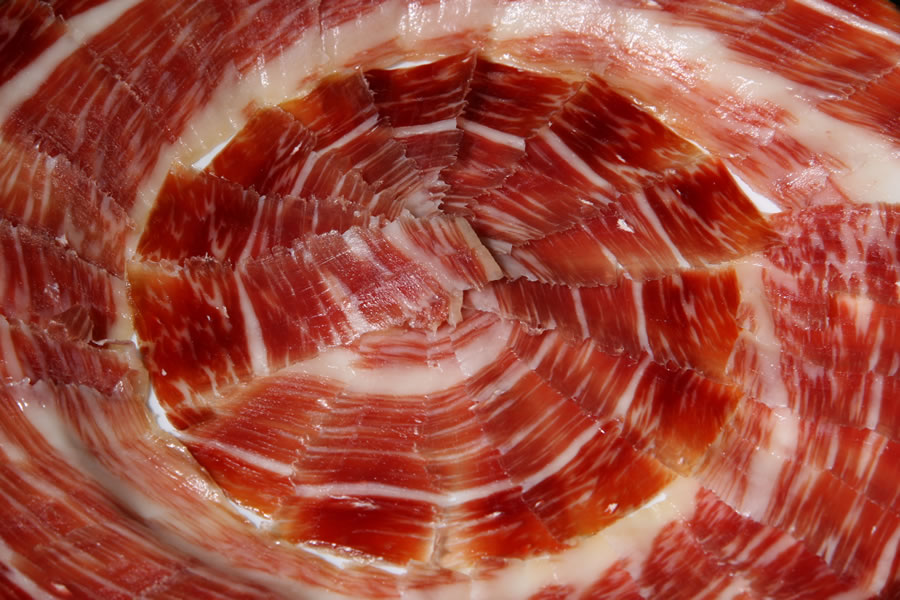
Spain: Mathematics explain the smell of a good ham
Researchers from the Fat Institute (CSIC-Sevilla) have developed mathematical models to predict the march and the optimal time of healing of the ham. So when a part required to move from one phase to another process, for example the dryer to the maturation cellar.
So far, the method of fixing the exchange period in the production process is based on the perception of the experts in each industry, based on accumulated experience.
Researchers have set mathematical equations to accurately track the behavior of the parts. Thus, the analysis of the profile parameters as fat and moisture loss, the method is able to predict when to pass the ham to a new phase of their individual maturation process.
For the mathematical model, researchers have monitored a group of 10 hams throughout the healing process: after slaughter pig, until the part is viable, for a period of three years. “We installed equipment in each piece taking measures on several parameters continuously, so every time data is obtained. Is the first track of the same hams is done for so long without degrading the product, “he says Descubre Foundation responsible for the study, Manuel Leon, the Fat Institute.
After analyzing the data, researchers have studied the evolution of the lipid fraction of subcutaneous fat of Iberian ham during dry curing. They have determined the generation of so-called volatile compounds responsible for the aroma of the product, and that the experts are grouped by families. Specifically, at work “Evolution of volatile hydrocarbons from subcutaneous fat During ripening of Iberian dry-cured ham. A tool to differentiate Between periods of the ripening process” published in the journal Food Research International study hydrocarbon fraction shown .

Researchers have found changes in the amounts of these compounds in the subcutaneous fat during the ripening process. Thus, they have determined that a temperature increase associated with the generation and loss of hydrocarbons and, during curing, its amount was reduced.
Experts stress that the information in their mathematical models to optimize processes in the meat industry. “We provide a scientific model to a task that was previously based on human experience. If we know all sections of the piece is easier to identify where a fault has occurred, which benefits the traceability and food security, “says Manuel León.
Source: Descubre Foundation