
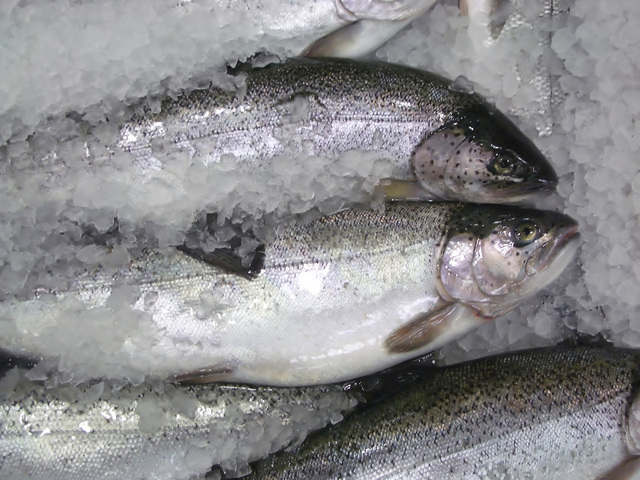
Bolivia will have a new aquacultural complex of 76 hectares
September 8, 2015
They committing an investment of 28.7 million dollars to benefit more than 2,000 families in the Cochabamba Tropics, the Enterprise Support Food Production in Bolivia (EMAP) and Enterprise Project Pacú – Aquaculture LTDA, signed morning Tuesday a contract for the implementation of Piscícola complex in the town of Chimoré.
The event was attended by President Evo Morales, the Minister of Productive Development, Ana Veronica Ramos, Minister of the Presidency Juan Ramon Quintana, Minister of Health, Ariana Campero, Cochabamba Governor, Ivan Canelas, the Manager EMAPA General Avelino Flores, President Pacú Business Project Manager – Aquaculture LTDA, André Jaime Brum, mayor of Chimoré, Silveriano Lara and representatives of social organizations of the Cochabamba Tropics.
“A study was made of soil and the mayor quickly made viable 76 hectares, so the first fish industry in Bolivia will be in Chimoré (…) The 2017 inaugurate the complex tropical fish, this work is not only for this region but for all the Tropic of Cochabamba, “the president said during the ceremony.

A complex of 76 hectares
The new fish EMAPA complex will be built on an area of 76 hectares and will be built over a period of two years, generating more than 95 direct jobs and 475 indirect jobs.
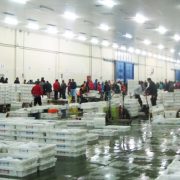
The infrastructure will include a plant breeding (pools, battery incubators, laboratories, etc.); pet food plant (automated line, baggers, laboratories, etc.); a refrigerator (refrigeration, freezing, heat transport); plant silage (silos, receiving and storage system); in addition to general equipment (machinery, equipment, vehicles, cold chain, etc.).
The modern building will have a capacity to process 5 million fry per year, 5-8 tonnes of pet food, pork, poultry and fish per hour, 3 dressing metric tons per year and 131.5 tonnes of fish for fattening by year.
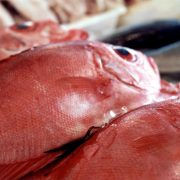
For his part, Minister of Productive Development, Ana Veronica Ramos, noted that this complex will be crucial to provide fish meat to the Bolivian population.
Objective: To increase the consumption of fish
“Studies indicate that in Bolivia consumption of fish meat is 2 kilos per year, a low figure compared to the consumption of beef, this complex will be crucial in the process of change as it will improve the quality of supply citizenship and nutrition. ” Ramos said that after the implementation of complex, specialized professionals will be trained in fish farming.
Within this framework, the Governor of Cochabamba, Ivan Canelas, remarked that people Chimoré is a fighter and that one of the fruits of that struggle will be just implement this Piscícola complex, the largest in Bolivia. “Chimoré becomes the economic and productive center of Cochabamba, will benefit thousands of families of jobs created over half a million people,” said the departmental authority.
The vice president of the Coordinator of the 6 Federations of the Tropic of Cochabamba, Leonardo Loza, emphasized that the state incentive to the productive region ensure decent food to the Bolivian population.
Source: EMAP (Enterprise Support Food Production in Bolivia)