

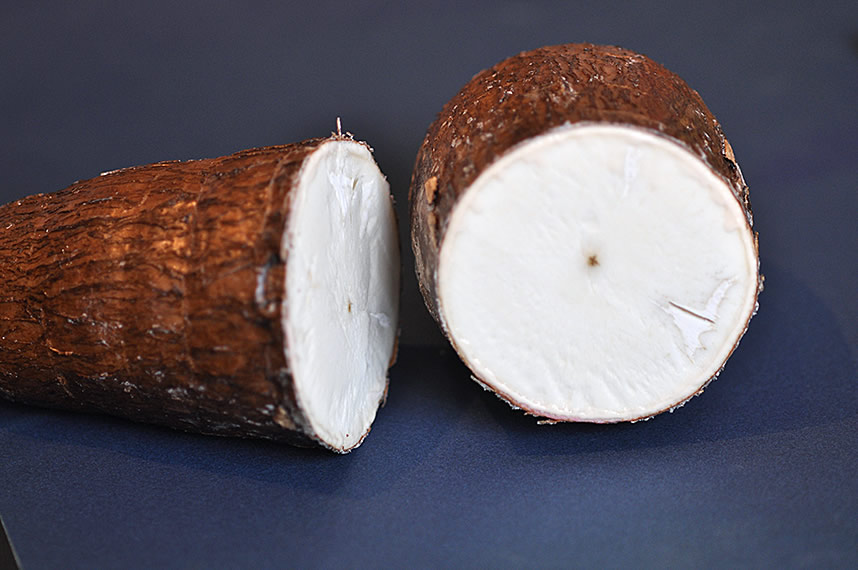
Cassava takes advantage because it resists climate change
Cassava is adapting better to higher temperatures compared to others such as beans or corn, whose crops are more sensitive to climate change, according to the expert Clair Hershey.
It is currently one of the crops that are growing fastest in the world and is resisting better than others the rising temperatures due to climate change, the experts pointed Mondays.
In a seminar organized by the Organization of the UN Food and Agriculture Organisation (FAO) at its headquarters in Rome, Clair Hershey specialist said that since the 80s, the global production of this tuber has increased by 52% due, among other reasons, in that period doubled in Africa.
Hershey, the International Center for Tropical Agriculture, based in Colombia, considered that food like potato is adapting better to higher temperatures compared to others such as beans or corn, whose crops are “more sensitive to change climate “.
Another issue is how to deal with pests and diseases, which are also to worsen with global warming and “are increasingly being introduced in Asia” affecting cassava fields, Hershey said.
While he stressed, the tuber can offer higher revenues despite climate change still needs to expand to new markets, the further investigation genetic diversity and that long-term control soil erosion and pesticide treatment.

More than 200 million people still rely on cassava as their main crop, 65% destined for human consumption and the remaining 35% for fuel and industry, according to figures presented at the event.
That latter figure will rise in the future, especially in Latin America and Asia, with Africa are the main production of that crop, estimated Hershey. The expert said that the global trade in cassava comes mainly from Asia, especially Thailand, which mostly sells to China for your industry.
According to the FAO, Nigeria, Brazil, Thailand and Indonesia account for half of world production, which is split between continents Africa (50%), America (16%) and Asia (30%). With the rising price of cereals, cassava has become in recent years an alternative to wheat and corn, and has important nutrient to be rich in proteins, carbohydrates, minerals and vitamin C.
Source: EFE