
The raisin from Muscatel of la Axarquía and the Valle Salado of Añana, Important Systems of World Agricultural Heritage
The Spanish candidacies of Valle Salado de Añana (Álava) and the Raisin of Muscat of the Region of La Axarquía (Málaga) have been recognized as Globally Important Agricultural Heritage Systems (GIAHS), granted by the United Nations Organization for Food and Agriculture (FAO).
Both Spanish candidacies, which have received significant support from the Ministry of Agriculture and Fisheries, Food and Environment in the process of processing, are the first two in Europe to receive this international recognition.
GIAHS are remarkable systems for the use of land and landscapes, rich in biodiversity of global importance, which evolve from the co-adaptation of a community with its environment and its needs and aspirations, for sustainable development.
The 36 agricultural heritage systems recognized until February this year cover an area of about 5 million hectares worldwide, mainly in Asia, America and Africa

The Valle Salado de Añana is an inland saline in the province of Álava, an example of cultural landscape originated by an industrial activity linked to an extraordinary natural resource, such as the abundant springs of salt water to obtain salt.
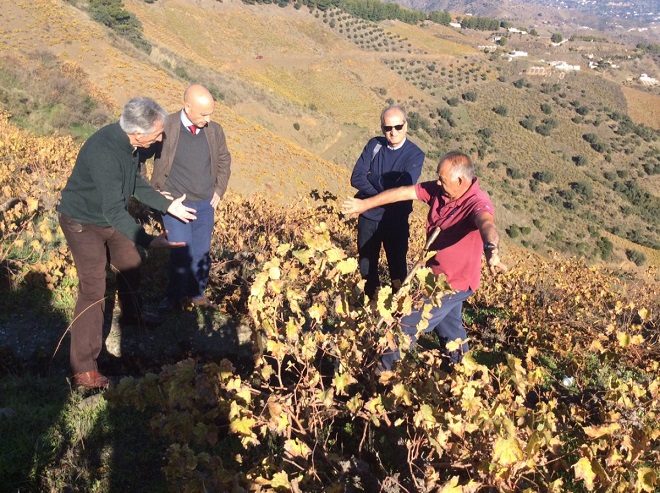
For its part, the candidature of the raising from la Axarquía is the conjunction of a sustainable agricultural crop in an environment rich in biodiversity, managed through traditional techniques, whose result is the main source of economic resources of this rural community
In order to verify that these candidacies were adapted to the requirements of the GIAHS, Professor Mauro Agnoletrti, an FAO scientist, visited both territories and met with the agricultural collectives and the local and regional authorities.
Among the characteristics of the Globally Important Agricultural Heritage Systems are its high levels of biodiversity and being agro-ecosystems fed by traditional knowledge structures and technological innovations of producers
They also have systems and technologies of biodiversity, management and conservation of soil and water resources that can improve modern agro-ecosystems. In addition, their diversified agricultural systems contribute to food security and favor local and national livelihoods.
These agricultural systems show resilience and robustness to deal with human and climatic-environmental disturbances and changes
In addition, they are characterized by having strong cultural values and collective forms of partner organization.
With the creation of the figure of GIAHS, FAO seeks to promote the worldwide recognition of the importance of agricultural heritage systems and the need for institutional support to safeguard them.
In addition, it aims to train agricultural communities and local and national institutions to achieve better management of GIAHS, generate income and add value to the goods and services of these systems.
Source: MAPAMA