

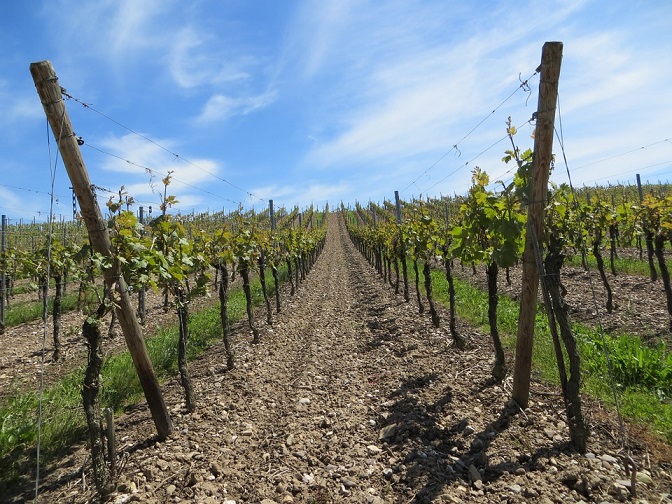
Spain: the MAPAMA authorizes 4,950 ha. for new vineyard plantations in 2018
The Ministry of Agriculture and Fisheries, Food and Environment has set at 4,950 hectares the area that may be authorized for applications for new vineyard plantations in 2018, at the national level, according to the resolution of the General Directorate of Agricultural Production and Markets published on December 29th in the BOE. As reported by MAPAMA, this area represents 0.52% of the area currently planted with vineyards, which means maintaining the same growth rate as in the previous season.
The resolution also establishes supra-autonomous protected appellations of origin where limitations may be applied to new plantings and restrictions on applications for replanting authorizations and conversion of replanting rights.
Likewise, this norm publishes the score assigned by the autonomous communities to each type of exploitation of the priority criterion relative to the holder of vineyard with small or medium exploitation.
This resolution has been issued under the Royal Decree 772/2017, which regulates the potential of viticultural production, as well as Regulation 1308/2013 of the European Parliament and the Council, which creates the common organization of markets for agricultural products.

In relation to the authorizations for new vineyard plantations, the community regulation establishes that they must assume more than 0% annually and no more than 1% of the area planted with vineyard
According to a note issued by the Ministry, the area that may be authorized for new vineyard plantations throughout the national territory during 2018 will allow maintaining the balance between the two objectives pursued by Regulation 1308/2013, such as achieving a sustained growth of the vineyard surface and avoid risks of excessive supply of wine products in relation to market prospects.
On the other hand, this regulation allows limiting the growth of the vineyard area in areas that may be eligible for the production of wines with protected designations of origin (PDO), when there is a clearly demonstrated risk of significant devaluation of the same. In this case, and according to Royal Decree 772/2017, the Ministry of Agriculture is responsible for setting limitations in the case of supra-autonomous PDOs, having received recommendations for this limitation of the regulatory councils of the PDOs Cava and Rioja, as well as the Interprofessional Organization of Rioja Wine.
The resolution applies to the PDO Cava the same national limitation of 0.52%, applied in this case to the inscribed vineyard surface in this PDO
As a result, a limit of 172.2 hectares applicable to next year’s applications is established, which is distributed equally among the three types of requests that may be made: new plantations, replantings and conversions of replanting rights (57.4 Ha., Each).
In the case of the PDO Rioja, limitations are established for the third consecutive year based on the evolution of the sales of its wines. Thus, the area for new plantations has been set at 0.1%, while no replanting or conversion of rights has been authorized
Both in the case of the Rioja and Cava PDO, the limitations have been established for one year.
Likewise, the resolution publishes the score awarded by each autonomous community to small and medium-sized farms that will have priority in accessing new plantations. This is a new priority criterion for applicants for authorizations of new vineyard plantations that was introduced by Royal Decree 772/2017 and that will be applied for the first time to requests for new plantations in 2018.
This criterion will allow, in addition to prioritizing those small and medium-sized holdings with greater interest in each of the autonomous communities, to increase the number of priority groups, reducing the number of partially admitted applications (that is, applications subject to apportionment), to the benefit of applicants and administrations.
Source: MAPAMA