
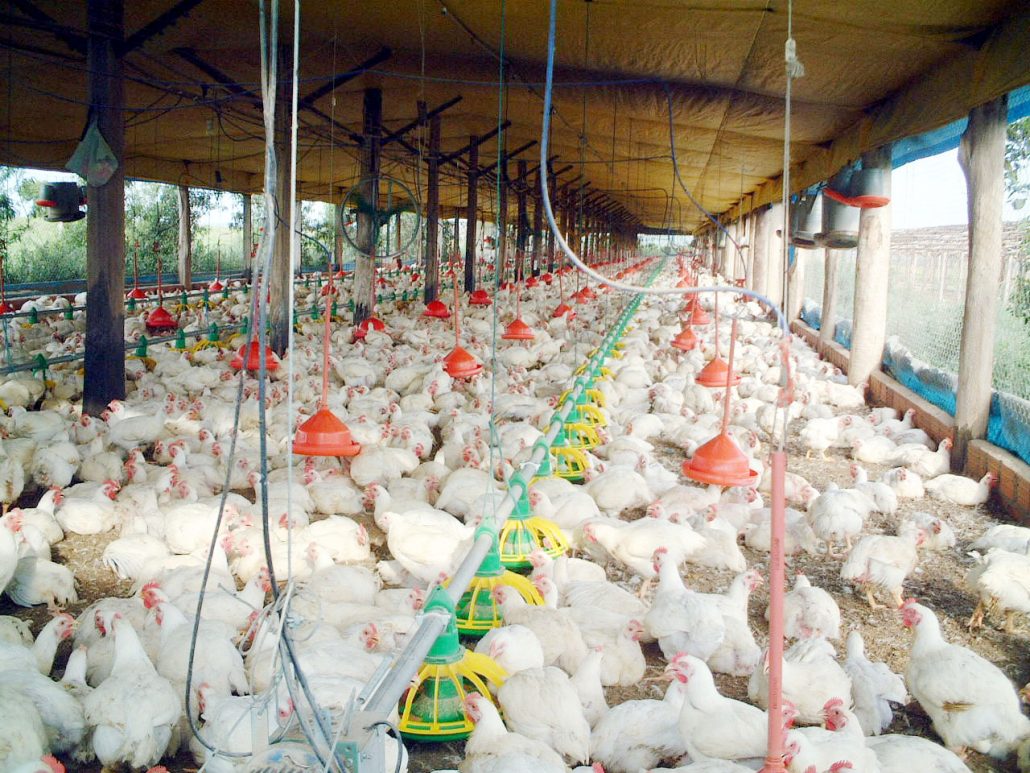
EU: Broliers holding feed production
Production of compound feed in the EU-28 in 2015 rose to unas156 million tons, which is 0.2% more than in 2014, according to data from the European Federation of Compound Feed Manufacturers (FEFAC) . Food costs fell in 2015. This year does not promise for this sector.
Production of compound feed in the EU-28 in 2015 amounted to 156.1 million tons, which is 0.2% more than in 2014, according to data from the European Federation of Compound Feed Manufacturers ( FEFAC). Food costs decreased in 2015 compared to 2014, due to the good harvest of cereals in the EU, both from the point of view of quality and health. It has also helped to reduce cost has been a good international supply of oil cakes, especially soybean cake.
These lower production costs have helped somewhat to pig farmers, who have seen have been reducing meat prices throughout 2015, due to the continued increase in production, an increase that has reached 1%. In 2015, industry production of feed for pigs remained stable.
In relation to cattle feeding, the situation is different zones, depending on how the weather has influenced the production of fodder. The elimination of milk quota system which provided for an increase in milk production, has had no visible effect in the field of animal nutrition, since the production of feed for cattle has fallen by 1% in 2015 compared to 2014 .

Poland has again achieved the best result has been among the countries that are major producers of feed, with annual growth of 4%, a result of the demand for poultry feed, which has become Poland’s largest producer of meat EU bird. By contrast, Germany, France, Spain, Italy, United Kingdom and the Netherlands have seen their feed production has varied between -0.5% and + 1%. Germany has strengthened its position as a leading country in the EU in terms of production of compound feed, ahead of Spain and France.
Forecasts for 2016
This year might not be good for the community sector of animal feed, according to the pessimistic forecast FEFAC, which expected to continue increasing demand for poultry feed, but to a lesser extent than in 2015 (+ 1%). However, a significant drop in estimated demand for feed for pigs (between 2-3%) due to lower production of pork is expected in the EU. In addition, weather conditions have been favorable for fodder production in northern Europe, so the demand for feed for cattle could be reduced by 1% in 2016. All these factors lead to production in 2016 compound feed is reduced by 0.5% compared to 2015.
However, these estimates may be affected by a number of factors. Such as El Niño in the South that can influence the evolution of the global dairy market hemisphere the risk of rainfall deficits in southern Europe or threats of diseases (avian influenza, bluetongue, African swine fever). Negotiations with Russia on health issues, if they conclude positively, can reactivate exports of certain pork products to Russia and relieve pressure in the pork market.
The feed prices have been declining since 2013 and the 2015 good harvest of cereals and oilseeds is expected that this trend will continue at the beginning of 2016, as estimated by FEFAC. However, it remains to be seen how it impacts the drought in the 2016 soybean harvest in northeastern Brazil.
Source: FEFAC