
Cirilo Arnandis: “We are looking for new khaki consumers to meet the growth in production”
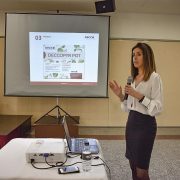
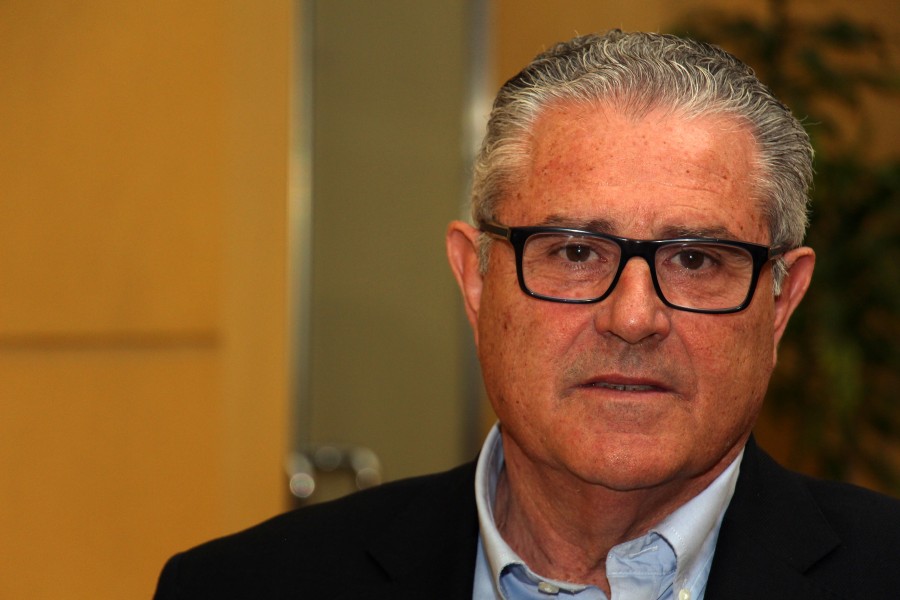
Cirilo Arnandis is president of the D.O.P. Kaki Ribera del Xúquer and the head of Agrifood Cooperatives of Valencia. On October 5 he led the presentation of the 2015 campaign of the DOP a closed Valencia by the Minister of Agriculture, Elena Cebrián event. During the event, Arnandis announced that during this campaign is expected to reach production of 230,000 tons, a figure that in five years will more than double, as it is estimated that this year will reach 550,000 tons.
Before a large audience, the president conjured fears that such growth will end up causing a collapse in sales. In his own words: He explained that the bubble “not come” if it ensures that consumers value product. Therefore, the main objective in promoting this year is to increase brand awareness among consumers, which currently is at 11.7%.
In e-Commerce Agricultural, Cyril Arnandis interviewed in his dual capacity as President of the DOP and Agrifood Cooperatives of Valencia.
e-Commerce Agricultural: Persimmon PDO Ribera del Xúquer sells better inside or outside Spain?

Cyril Arnandis: We are selling everywhere. It is clear that the domestic market is our market proximity, but we are already entering other. In fact, we are already in Europe -England includes- with different volumes of consumption. And we are entering countries like Canada, United States and United Arab Emirates. That is, we are looking for new customers that allow us to accommodate growth we have and will continue to have a higher consumption.
ECA: What percentage of sales are for export?
CA: About 80% of the production is exported. And it will continue to grow.
ECA: What role does Latin America ?, is a importing market or a rival?
CA: Latin America is not clear because it is counter season. Therefore, our production does not compete with Latin America. There are major consuming countries and large producers such as Brazil, allowing us in periods that they have fruit to access them. In fact, access has been gradually to countries like Brazil, and Chile.
ECA: In the case of khaki, what export strength cooperatives are having?
C.A. .: In the OED, 90% is cooperative product. Therefore, the role of cooperatives is important. What we would like is that trade is working out and product DEO also was in all the DEO and we worked in the same direction and support the promotion.
ECA: To what extent is replacing the citric persimmon in Valencia? Are you being a lifeguard or a rival?
CA: I think persimmon can never sustuir citric. It complements. It is a product that works well in all areas. It has an extraordinary response in the area of the Ribera de Júcar. But it will never be a substitute for citric is the first production in production and exports in Spain, because we produce more than seven million tons. Yes it complements in some areas, which has allowed the farmer to have some outlet for diversifying output.
ECA: The EU and the Ministry of Agriculture asked insistently concentration of supply cooperatives focus and serve as a vehicle for varietal renewal. Is this is being achieved?
CA: Cooperatives are businesses, cooperative enterprises. We have very clear that the concentration of supply is important, but more important is management. Well-managed small family businesses and large corporations work well well-managed work well. And small and large companies perform poorly mismanaged. At the end we know that the concentration of supply is important but the merger always happens because there is a conviction of the parties that will be an improvement. Since cooperatives we support, but knowing that the end is a business decision that will have to take at all times the companies that decide to take the project forward.
ECA: But according to the Ministry, the concentration of supply is the only way that the Valencian citrus profitable.
CA: Well, I think there are other ways to make it profitable. Concentration are doing continuously, but will have to do that and other policy measures that will allow the citrus products can compete in the market with dignity, that is not a product commodité in supermarkets to sell other products.