
Bolivia: Government boosts Genetic Research on Quinoa
The Government of Bolivia, through the Ministry of Rural Development and Lands and the International Quinoa Center (CIQ), in coordination with the Inter-American Institute for Cooperation on Agriculture (IICA), organized the First International Forum on the cultivation of Quinoa, under the heading “Opportunities and Challenges to the discovery of the quinoa genome”. The objective of this initiative is to contribute to the strengthening of the country’s quinuero sector.
According to Edgar Soliz CIQ director, “the discovery of the quinoa genome has generated speculation in different sectors; in this context it is very important to know the scientific analysis to identify strategic actions that contribute to the improvement of the national and international production and trade of Bolivian quinoa”.
The results of genetic research on quinoa must be translated into a strategic plan with short, medium and long term actions that contribute to the strengthening of this productive sector
The international forum celebrated by CIQ, has had the interventions of Dr. Erick Jellen, international expert in genetics of quinoa and Dr. Alejandro Bonifacio, renowned national researcher. “There are several opportunities that arise from the discovery of the genome of quinoa, to improve the agronomic potential of this Andean grain and its contribution to reducing hunger in the world”,explained Soliz, for whom this Forum will contribute to Establish strategic lines of short, medium and long term to boost the production of this cereal.
For Erick Jellen, research on this crop has great potential for the production of differentiated quinoa
“DNA sequence information from quinoa is extremely valuable in identifying key genes that control important agronomic traits and knowing the genetic variability between crops,” Jellen said.
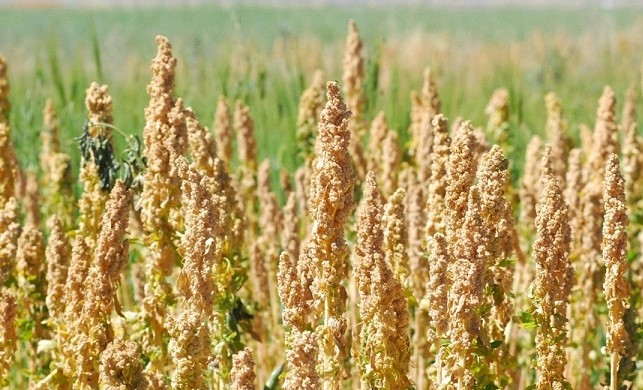
The discovery of the quinoa genome has been analyzed by a group of scientists from King Abdullah University of Science and Technology in Saudi Arabia, who succeeded in sequencing the complete genome of quenna (Chenopodium quinoa).
Source: Ministry of Rural Development and Lands of Bolivia